 |
Rufous Hummingbird
Common Name |
Rufous Hummingbird |
Scientific Name |
Selasphorus rufus |
Length |
3 1/2" - 3 3/4" |
Weight |
Male Rufous Hummingbirds average 3.2 g, females 3.4 g. |
Range |
Abundant migrant in the Western U.S. |
Estimated Population in the U.S. & Canada |
19,000,000 per the American Bird Conservancy |
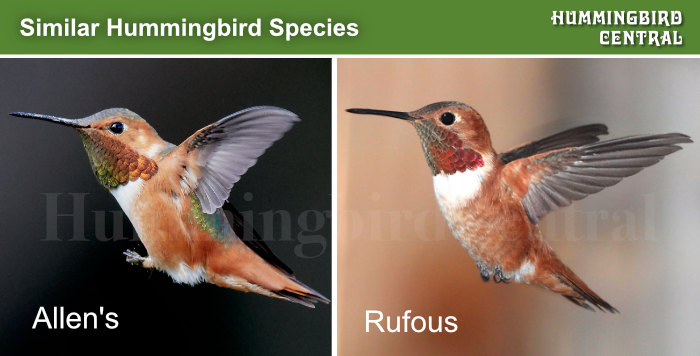
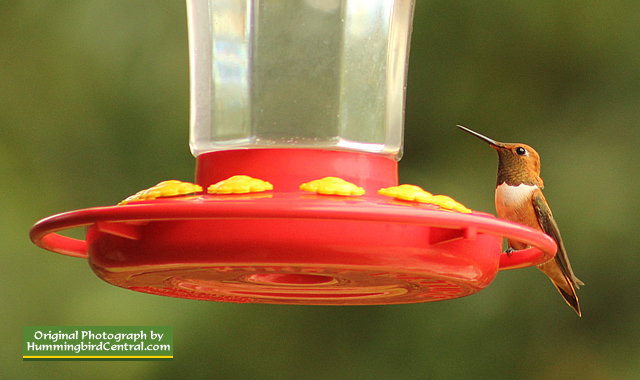
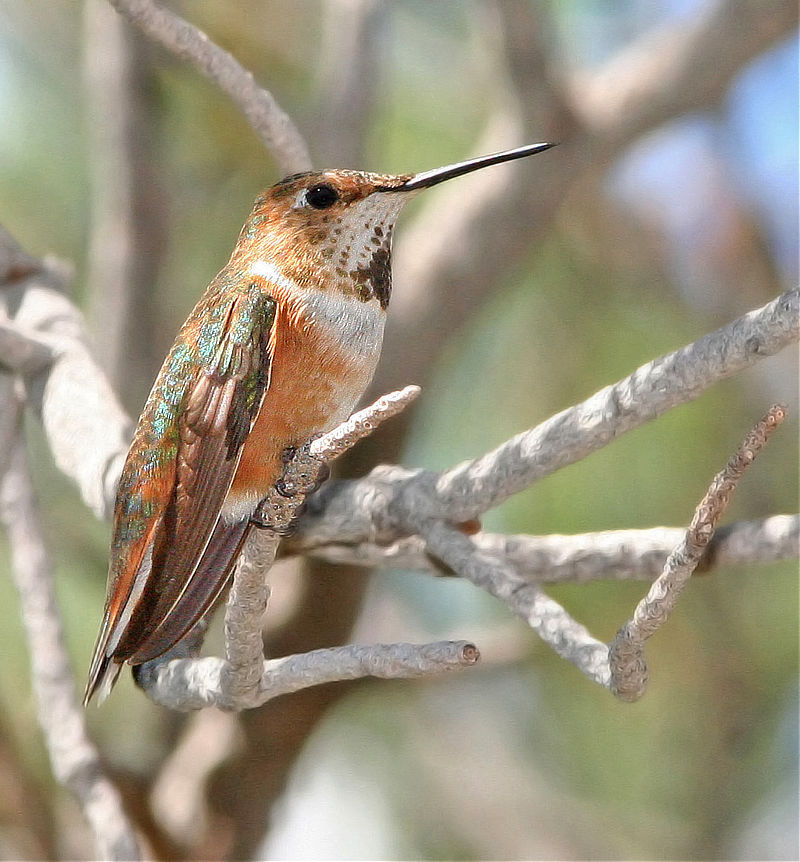
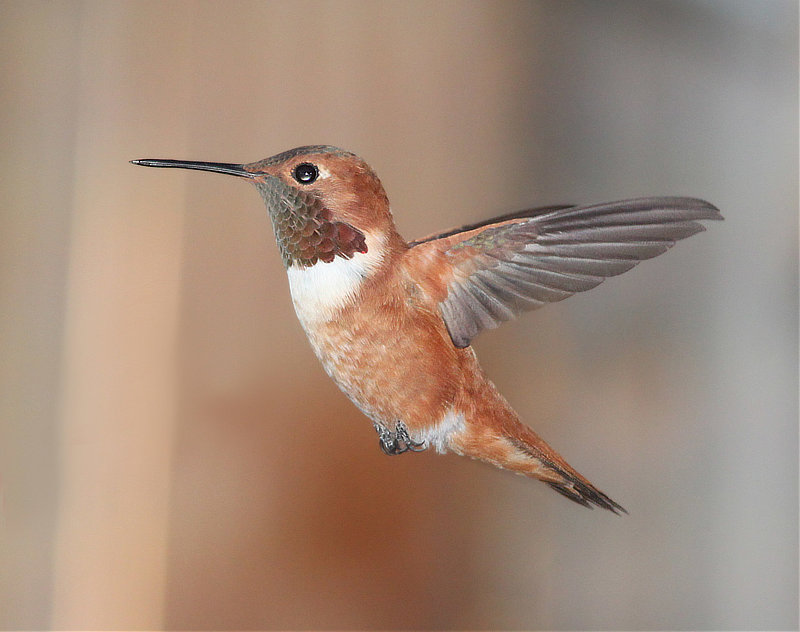
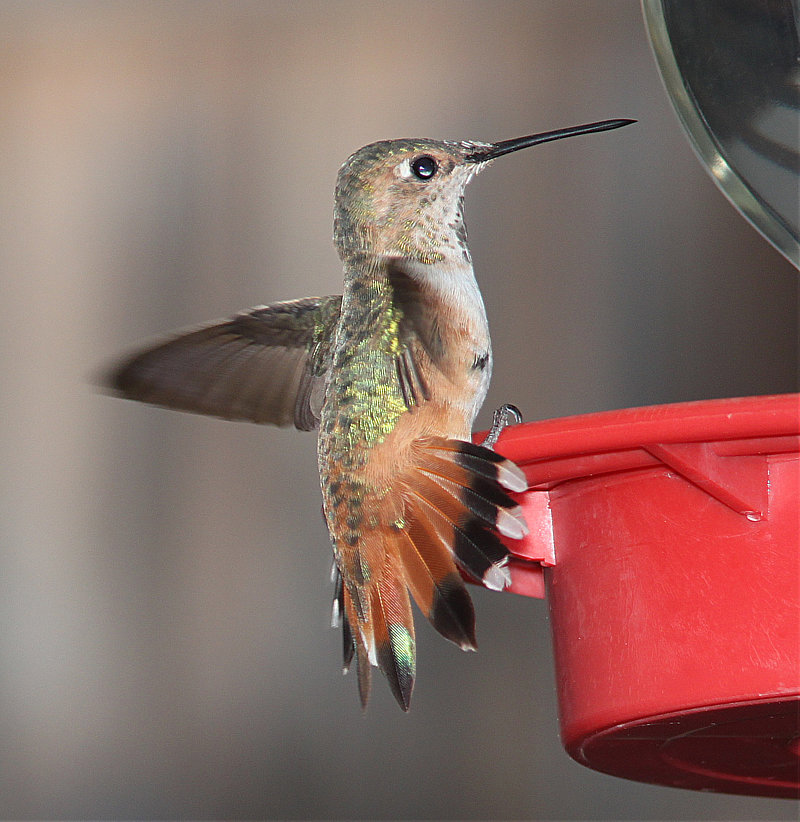
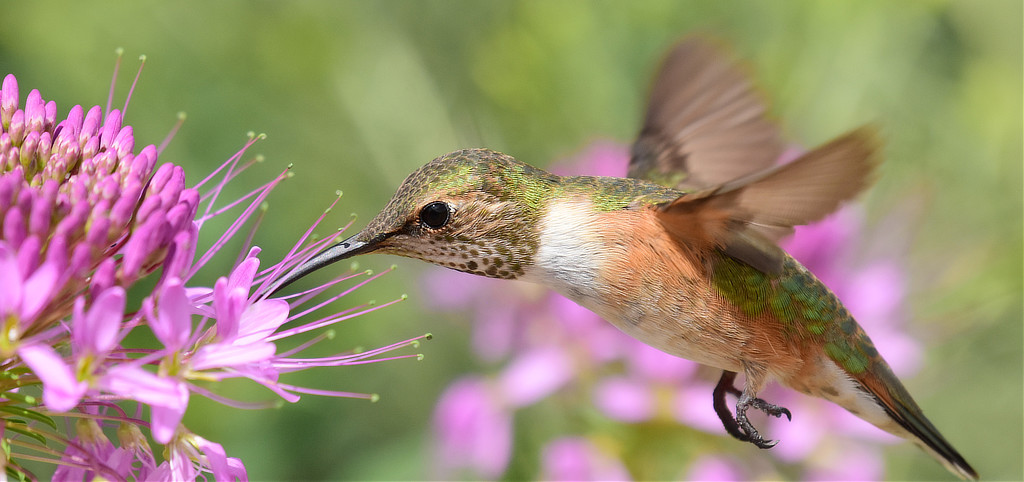
Characteristics and Identification No other North American hummingbird has a rufous back. They are fiercely territorial, feisty, and are perhaps the most aggressive hummingbird. It is a fairly small, slender hummingbird with a nearly straight medium-length black bill and a tail that tapers to a point when folded. The body is overall rufous. Male has a orange-red gorget, rufous, reddish brown back, tail and sides. Female has rusty sides and undertail coverts. Females and immatures are similar to Allen's hummingbird, the larger Broad-Tailed and the smaller Calliope. Rufous hummingbirds breed in southern Alaska, western Canada and the Pacific Northwestern states of Washington and Oregon. Most will overwinter in wooded areas in the Mexican state of Guerrero. The female builds the nest about 1.5" in diameter from plant down, fibers, flower petals and bud scales. The eggs are white, and unmarked. The clutch size is normally 2, with an incubation period of 15-17 days. |
|
 |
|
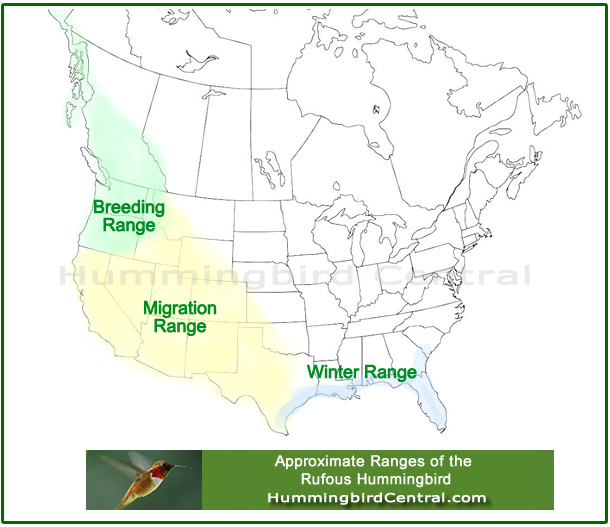
Rufous Hummingbird Migration The spring migration north from Mexico is through the Pacific states, and the fall migration south is through the Rocky Mountains. During migration, they can be found in mountain meadows as high as 12,000 feet. Winter habitat in Mexico and southern Texas includes shrubby openings and oak-pine forests at middle to high elevation. It is also a somewhat rare visitor to Louisiana and the Gulf Coast during winter. Migration paths of the Rufous can span over 3,000 miles. The map below shows the approximate migration and breeding ranges of the Rufous Hummingbird in North America. Actual ranges vary from year to year and can depend on a number of weather-related conditions and other environmental factors. Periodic Rufous sightings in winter are made along the U.S. Gulf Coast, and even into areas like South Carolina and Tennessee. |
|
 |
|
Rufous Hummingbird |
 |
Popular Hummingbird Feeders This Year
|
|||
 Aspects HummZinger Excel Hanging Hummingbird Feeder with Built-in Ant Moat |
 Pinched glass Hummingbird Feeder with built-in ant moat, pack of two feeders |
||
 Colorful hand-blown glass Hummingbird Feeder, 32oz, with Ant Moat, Hanging Hook, Rope, & Brush |
 Perky-Pet 785-1SR Mason Jar Vintage Glass Hummingbird Feeder - 32oz Nectar Capacity |
||
 Colorful red glass Hummingbird Feeder, 26oz, with perch and 5 feeding ports |
 Red 16oz glass Hummingbird Feeder with 6 feeding stations and red ant moat |
||
 Mini Hummingbird Feeder with single flower, 4-Pack, 2.3oz |
 Nature's Way Glass Top-Fill Hanging Hummingbird Feeder |
||
 Two (2) clear plastic 10oz Hummingbird Feeders with built-in ant moat on top |
 First Nature 16oz clear plastic hanging Hummingbird Feeder with ant moat on top |
||
|
|||
|
|||

Rufous Hummingbird |
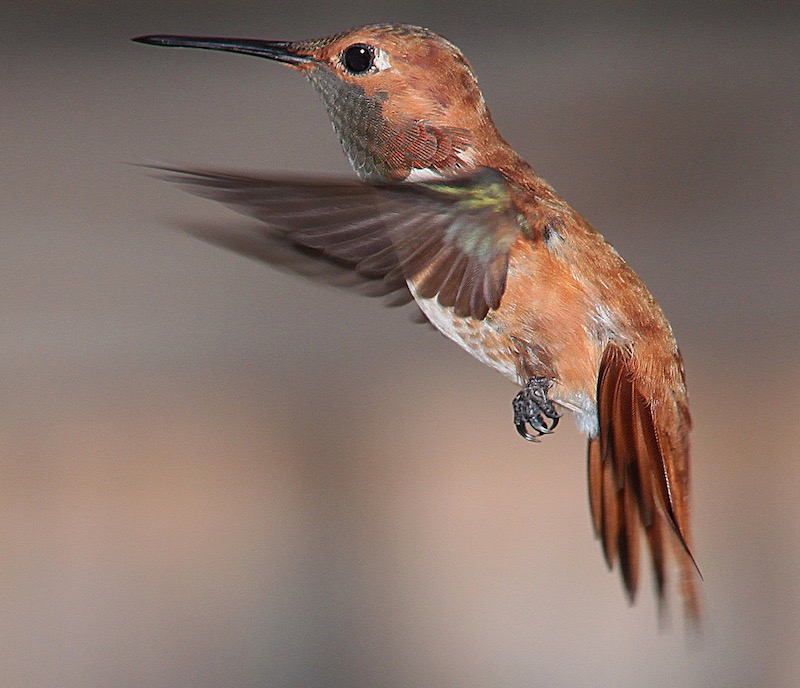 |
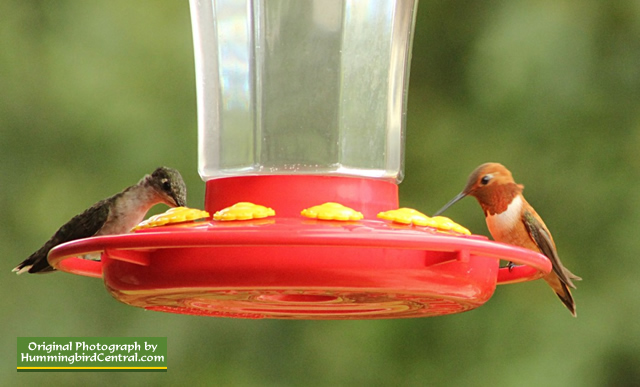
Comparison of a Rufous Hummingbird (R) with a Ruby-Throat Hummingbird (L) (Author's Archive) |
Rufous Hummingbird |
 |
 |
Rufous Hummingbird |
 |
 |
 |
Rufous Hummingbird |
 |
| Photo by and courtesy of USFWS |